




Handloads for the .56-50 Spencer Centerfire
Date: Oct 22 2007
The original .56-50 Spencer cartridge was reported to have been designed by Springfield Armory around 1861 and soon thereafter offered in the Model 1865 Spencer lever-action carbine (as well as Remington, Sharps, Peabody and other arms). The case was a rimfire, loaded with a 350-grain bullet and driven with 45 grains of black powder. About 1920, ammunition was phased out, and it remains obsolete today.
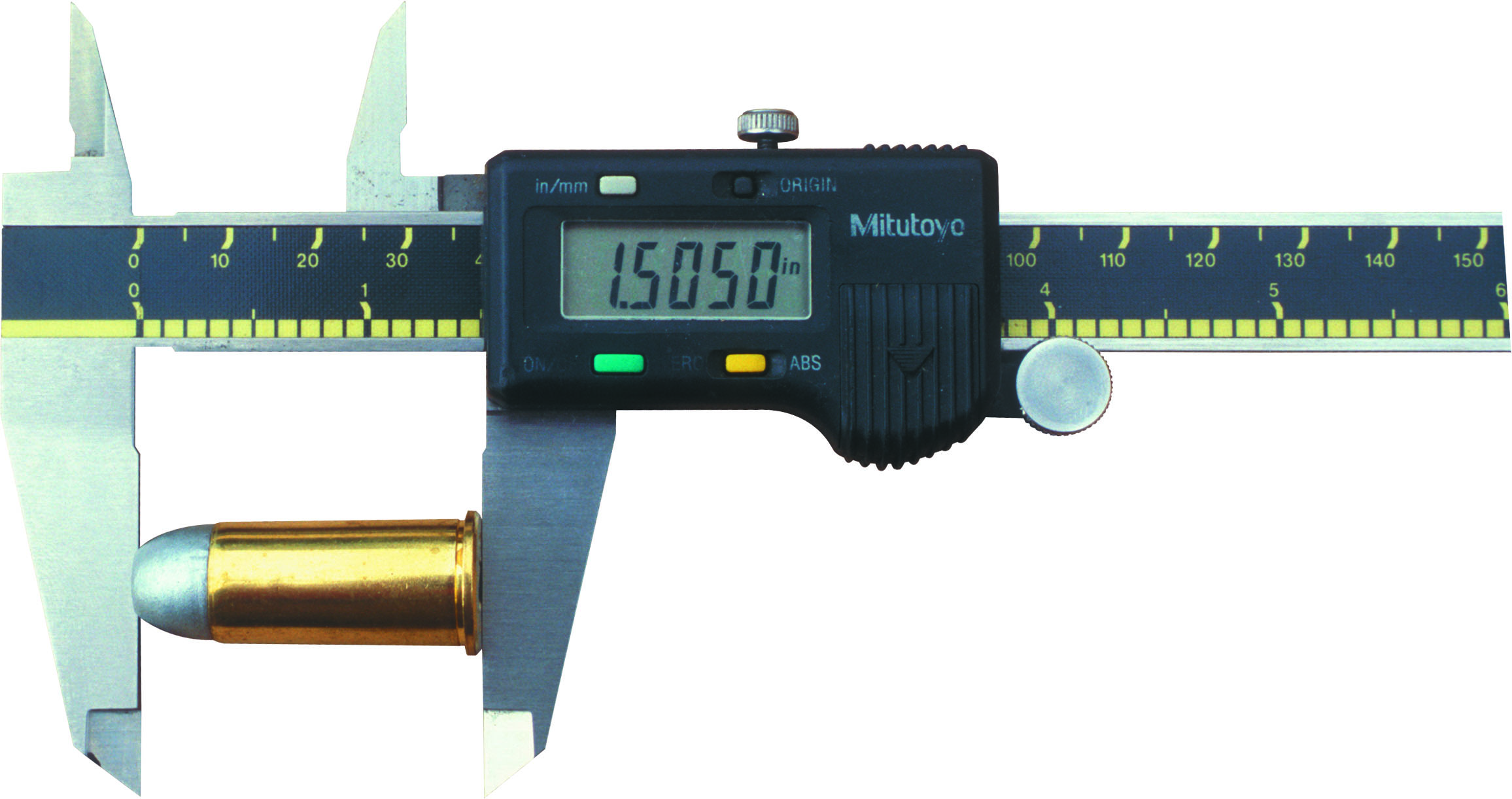
cartridgelength to 1.5050 inches,
which functioned reliably.
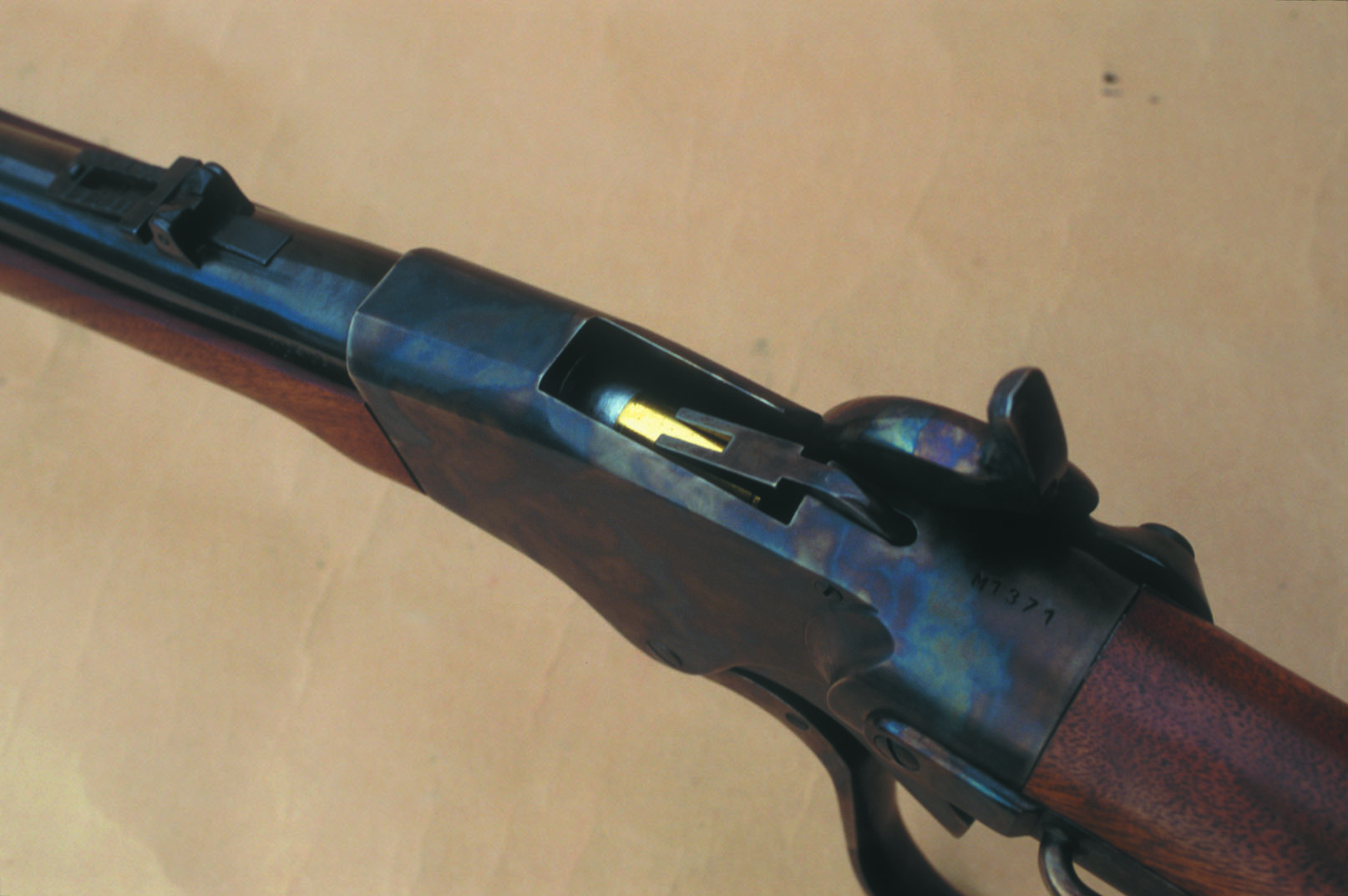
Several years ago, Taylor’s & Company, Inc. announced a reproduction of the Spencer carbine, but chambered in a modern version of the .56-50 with centerfire ignition. The Italian firm Armi Sport is producing the rifle, which appears of reasonable quality and will serve reenactments and traditionalists well. It has taken sometime for the guns to actually make it into production but are now readily available.
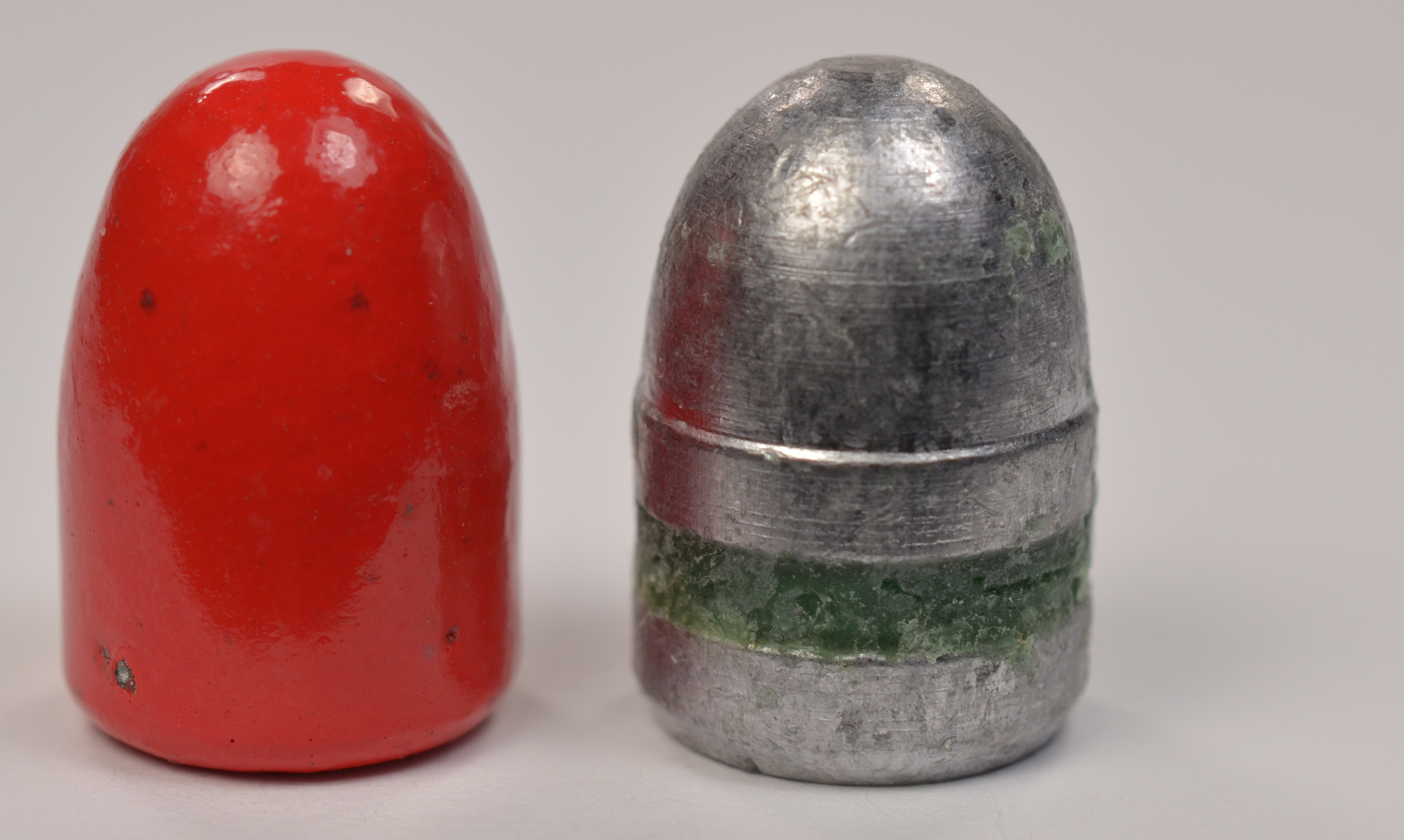
was crimped forward of the ogive,
while the 350-grain version was
crimped in the proper crimp groove.
As of this writing, there is only one company, TEN-X Ammunition (5650 Arrow Highway, Montclair CA 91763, www.tenxammo.com) producing factory fodder. Offerings include a 350-grain cast bullet at 1,279 fps (actual) and a black-powder load with the same bullet driven 986 fps (from a 20-inch barrel). I found these loads of high quality that offered low extreme spreads, accuracy and reliable functioning.
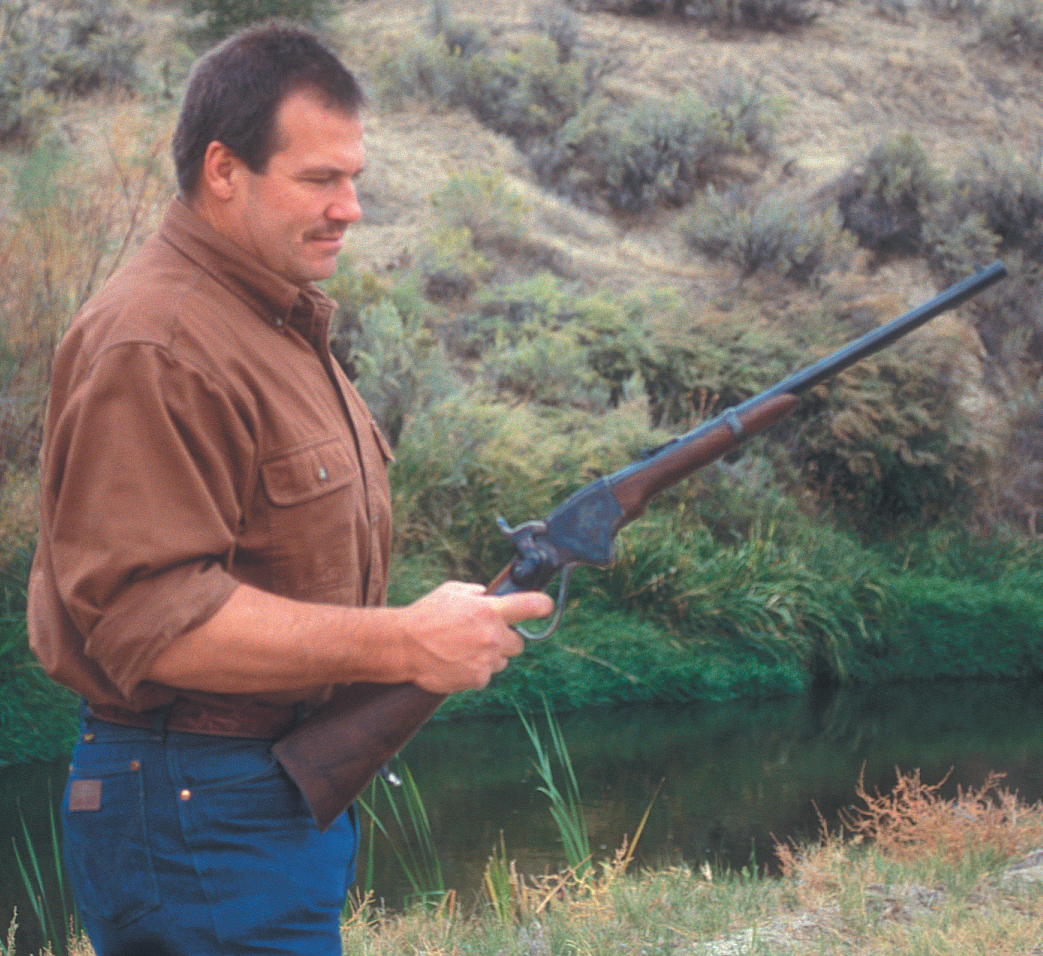
.56-50 Spencer centerfire to develop load data.
Handloading the .56-50 Spencer Centerfire
Before developing handloads for the new .56-50 Spencer centerfire, I had a number of questions that are pertinent to handloaders. The two most important are: To what pressure is the cartridge loaded or what is considered safe maximum? And what pressure levels is the action of the Armi Sport rifle capable of safely holding? These basic questions were asked of the importers (Taylor’s & Company and Cimarron F.A. Co.) and of the ammunition producer. As of this writing, no standard pressures have been established for either the rifle or factory ammunition.
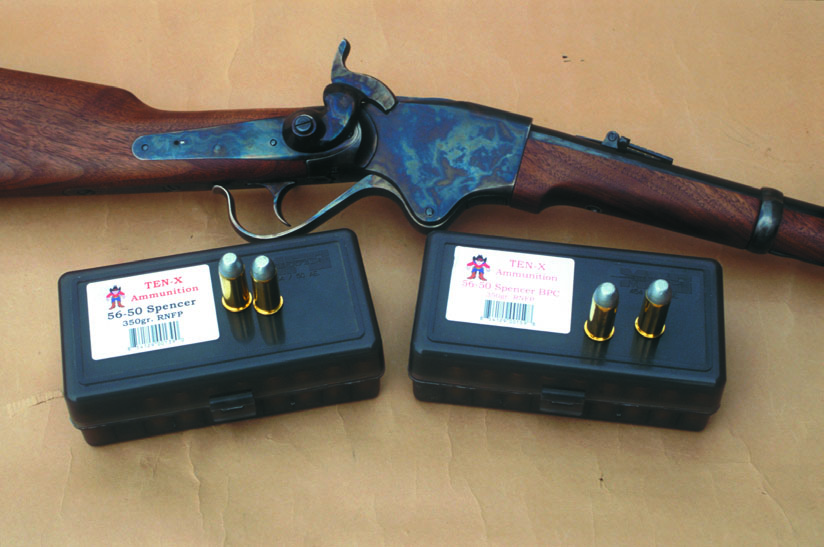
the only company offering factory
loads for the .56-50 Spencer centerfire.
Offerings include smokeless
and black-powder loads.
In studying the design of the rifle, it is not especially strong, and handloaders should approach it with caution. The pressures generated by factory ammunition were determined and used as a guide in developing the accompanying handloads. It is suggested to keep pressures within 14,000 to 16,000 psi, with 18,000 psi being considered maximum. Pressures this low are difficult for the hobby handloader to determine using conventional methods such as measuring case head expansion, even when using sensitive calipers that measure as small as 0.0001 inch. So it is strongly suggested to use loads exactly as shown in the accompanying table. It should be noted, however, that loads approaching maximum usually gave the best accuracy.
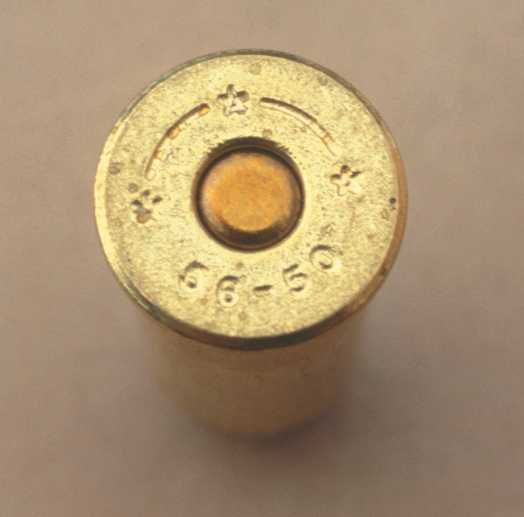
company offering cases
for the .56-50 Spencer.
.56-50 Spencer loads.
There are challenges associated with developing handloads for this cartridge. Foremost is the large caliber and case capacity, combined with relatively low pressures. Many powders simply do not burn predictably or reliably at these lower pressure levels and can give erratic results. Others do not fill up enough of the case, leaving considerable air space, and as a result powder positioning becomes critical, which can adversely affect pressures, ignition, velocities and in several instances proved unsafe.
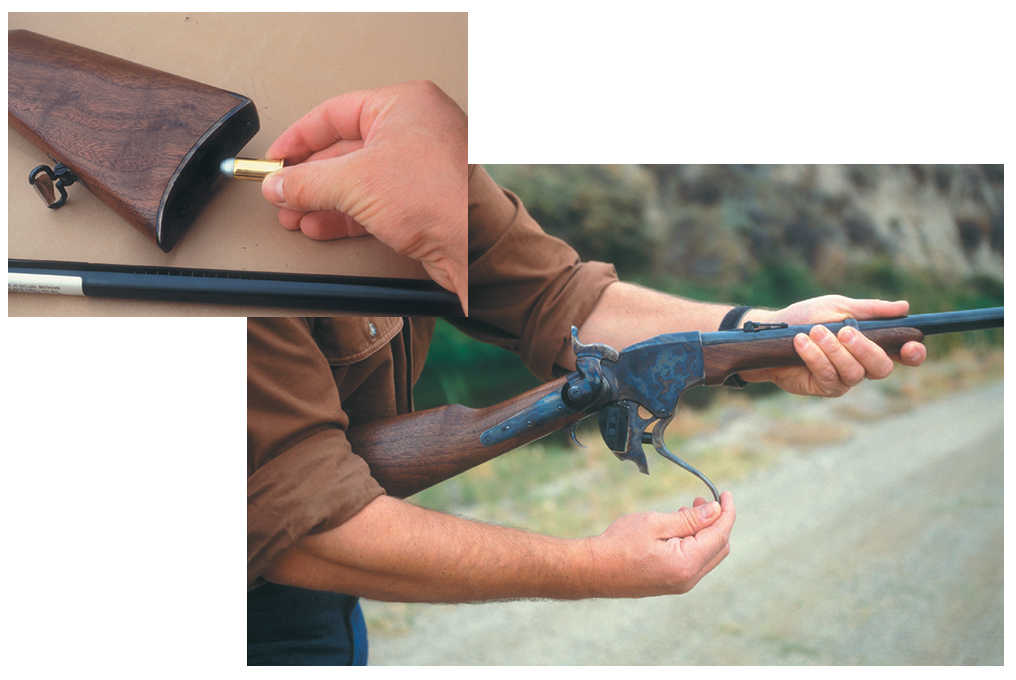
then held in place by a magazine tube in a similar fashion to some .22 LR rimfire rifles.
After loading cartridges into buttstock and inserting the magazine tube, the lever is
cycled to chamber a round. The hammer must be cocked manually for each shot.
Powders that ignite easily at low pressures yet bulk up enough to reduce the remaining air space proved good choices. Examples include Accurate Arms 5744, Solo 1250, Alliant Unique, Hodgdon Universal Clays and Trail Boss. Pyrodex Pellets (with 30-grain volume equivalent) were also used. And while time did not permit black-powder load development, the cartridge is well suited to this application.
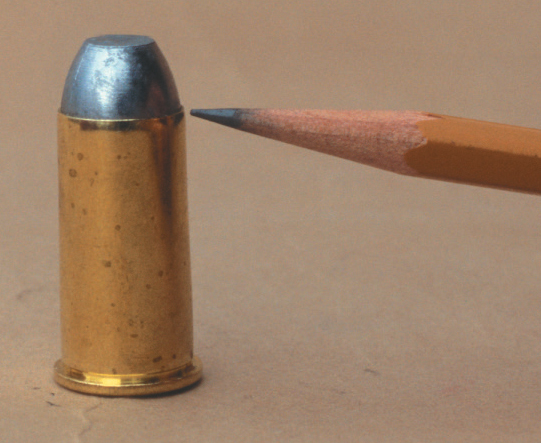
hold bullets, while cartridges
are cycled through the action.
The only company offering .56-50 cases is Starline Brass (1-800-280- 6660), and the cases are set up to accept Large Rifle primers. I experimented with Large Rifle and Large Pistol Magnum (CCI 350) primers with the latter giving better general results with lower extreme spreads and reliable ignition. For reference, primers were seated with the anvil contacting the bottom of the primer pocket, resulting in their being from .0090 to .0120 inch below flush.
To obtain proper ignition and to keep bullets in place while in the tubular magazine of the Spencer rifle, proper bullet-to-case fit and crimp are important. Bullets should fit tightly in the case when seated (prior to the crimp being applied). This is only mentioned as some die manufacturers have produced dies that failed to offer correct fit. After bullets are seated to the proper depth, a heavy crimp should be applied to prevent them from being pushed into the case while in the magazine (which could prove a dangerous situation). The overall cartridge length of handloads in the accompanying table was held to 1.505 inch or less. Bullet diameter is .512 inch, and all cast bullets were sized accordingly. Ready to load commercial bullets are limited, but Buffalo Arms Co. (660 Vermeer Court Ponderay, ID, 83852, or www.buffaloarms.com) offers 300- and 350-grain bullets that are cast 20-1 (lead-to-tin) and lubed with SPG, which works well with smokeless or black-powder loads. These bullets were used in developing the accompanying data. Contrary to what I expected, the 300-grain bullet proved most accurate of the two.
For those preferring to cast their own bullets, Lyman (475 Smith Street, Middletown CT, 06457, 1-800-225-9626, or www.lymanproducts.com) offers a suitable mould, 515139, for the modern .56-50 Spencer. It is estimated to drop bullets at 340 grains. Unfortunately I was not able to obtain a mould in time for this article but would expect this bullet to perform well.
There are reports of original .56-50 Spencer rimfire rifles that have been converted to centerfire, with owners now desiring to use them. I would not suggest using these guns with any loads listed here. The iron that they were crafted from is comparatively weak and may be fatigued. In addition these ancient guns were designed for black powder only and firing them with smokeless loads will prove dangerous!
As long as the above guidelines and loads are followed, ammunition will prove reliable and safe – and at a fraction of the cost of factory fodder.